
Best Shopfront Materials for Busy London High Streets
Choosing the best shopfront materials for busy London high streets is not simply a design decision. Your frontage must support the way customers see, enter and assess the premises while coping with daily pedestrian traffic, changing weather, cleaning demands and security concerns. The right combination of frame, glazing and protective features can make a retail frontage easier to maintain and more appropriate for the building.
For owners, landlords and retail operators considering a new installation or replacement, Direct Shopfront helps translate those practical requirements into a suitable shopfront specification. This guide compares the main material options and the questions worth resolving before work is commissioned.
Why material choice matters on a busy London high street
A shopfront is exposed in ways that many other parts of a commercial property are not. It is repeatedly touched, viewed at close range and affected by deliveries, street debris, rain, pollution and occasional accidental impact. In a crowded retail location, small signs of wear around frames, doors or glazing can quickly affect how the premises appears to customers.
Material also influences the scope of the design. A slim frame may maximise display space; a heavier-looking frame may complement a traditional façade; and the chosen glazing can affect visibility, privacy, safety and thermal comfort. The aim is not to identify one material as right for every business, but to select a system that suits the frontage, operating conditions and intended retail presentation.
For example, a fashion retailer may prioritise uninterrupted display glazing and a refined finish, while a convenience shop may give more weight to resilience, door use and shutters. A landlord replacing a damaged frontage may need a material that can be maintained consistently across several units. These are all shopfront material decisions, rather than purely decorative choices.
What to assess before choosing a shopfront material
Start with the actual conditions at the premises
Before comparing aluminium, steel or timber, examine what the shopfront will be expected to withstand. A prominent corner unit, a narrow pavement frontage and a sheltered arcade can produce very different requirements. Consider the amount of pedestrian traffic, frequency of deliveries, exposure to wind-driven rain, nearby road grime and the likelihood of knocks to doors or low-level glazing.
- Use of the entrance: A high-use door needs robust hardware and a frame system that remains practical to adjust and maintain.
- Display needs: Large display areas may call for carefully specified glazing and frame spans rather than selecting a material in isolation.
- Security risk: Assess the whole frontage, including locks, shutters, glazing and vulnerable side panels.
- Building character: Period features, neighbouring units and landlord requirements may narrow the suitable palette.
- Cleaning access: Smooth finishes and sensible detailing can reduce the difficulty of routine upkeep.
It is also useful to distinguish the frame from the glass. “Glass shopfronts” commonly describe a glazing-led appearance, but glass is generally held within a supporting frame or structural glazing arrangement. The frame material, glass type, door configuration and fixing method need to work together.
Compare lifecycle demands, not just the initial appearance
Low-maintenance shopfronts are rarely maintenance-free. Coated metal frames still benefit from cleaning, moving doors need periodic attention and glazing needs prompt inspection after an impact. The useful question is whether a material’s expected upkeep suits the business’s resources and the level of exposure at the site.
| Decision factor | Why it matters on a high street | What to discuss at survey stage |
|---|---|---|
| Durability | Frames and doors face regular use and occasional impact. | Frame profile, finish, door hardware and vulnerable locations. |
| Security | Visible stock and after-hours exposure require a considered specification. | Glazing, locks, shutters and how elements integrate. |
| Maintenance | Dirt, rain and public contact can make finishes look tired quickly. | Cleaning needs, repair access and finish suitability. |
| Appearance | The frontage should support the brand and building rather than compete with either. | Colour, frame sightlines, signage zone and display proportions. |
Where a business is weighing broader design choices as well as material options, our guide on how to choose the right shopfront for a London retail business provides helpful supporting considerations.
Aluminium shopfronts: a versatile option for modern retail premises
Aluminium is frequently considered for commercial shopfront materials because it can support clean sightlines, a wide choice of powder-coated finishes and substantial glazed areas. It can suit modern retail premises, offices, salons and food-led units where the owner wants a crisp, adaptable frontage without an overly heavy frame.
Powder-coated aluminium may offer good weather resistance when it is correctly specified and cared for, which is valuable where London rain, grime and frequent cleaning are expected. Its range of colours can also help a business align the shopfront design with existing branding or a building’s external palette.
Where aluminium can be a practical fit
Aluminium shopfronts can accommodate single or double doors, sidelights, fanlights and display glazing within a coordinated system. This flexibility can make them useful for replacement projects where the opening proportions are already established but the frontage needs a clearer retail presentation. Slimmer-looking profiles may increase the visible display area, although the appropriate profile depends on the opening size, glass specification and loads involved.
Businesses exploring this route can review London aluminium shopfronts in the context of frame finishes, glazing and installation requirements. Aluminium should not be treated as an automatic answer, however. The quality of fabrication, detailing, drainage, hardware and installation has a direct bearing on how well the completed frontage performs.
Trade-offs to consider
Aluminium may not always be the preferred visual match for a listed-looking or traditionally detailed building, and a very busy entrance can require careful attention to door sections and hardware. It is also important to specify glazing and security measures alongside the frame. A durable aluminium shopfront frame alone does not determine the impact resistance or security of the overall retail frontage.

WHY DIRECT SHOPFRONT
BUILT WITH PURPOSE.
FINISHED WITH
PRECISION.
Bespoke solutions. Durable materials. Professional installation. One team to manage your project from the first survey through to the final finish — with repairs and aftercare when you need them.
Glass, steel and other shopfront material options
Glass: visibility with specification choices
Glass is central to many high-street shopfronts because it allows customers to see products, lighting and activity inside. Large clear panels can make a compact unit feel more open, while tinted, obscured or decorative treatments may support privacy or a particular brand style. Yet glass should be selected as part of a complete system, with consideration given to its position, panel size, frame support and the risk of impact.
Toughened glass is often considered where safety glazing is appropriate because it is designed to break into comparatively small pieces. Laminated glass uses layers bonded together and may be considered where retaining fragments after breakage is beneficial. Neither description alone confirms suitability for a particular opening. Doors, side panels and low-level display areas need project-specific assessment, especially where the public is close to the frontage.
Steel: strength and a distinctive visual language
Steel shopfronts can be appropriate where a more substantial frame, a particular architectural style or long spans are part of the brief. Mild steel may be fabricated for bespoke designs, while stainless steel can offer a different finish and corrosion-resistance profile. A steel-framed frontage can give an industrial, premium or heritage-inspired appearance, depending on its detailing and coating.
The trade-off is that steel generally needs a considered protective finish and maintenance plan, particularly at joints, cut edges and exposed locations. It may also create more visual weight than a slim aluminium system. For a busy London high street, the decision should be based on the building character, desired frame lines and the practical commitment to maintaining the finish.
Timber, uPVC and composite materials
Timber shopfronts can be a strong aesthetic choice for properties where warmth, traditional detailing or a conservation-sensitive appearance is important. Timber framing requires protection from moisture and a realistic maintenance programme; without it, weathering can affect both appearance and performance. It may therefore suit some premises well but be less convenient for an operator seeking minimal exterior upkeep.
uPVC can be used in some commercial contexts, often where cost-conscious replacement and simple maintenance are priorities. Its available profile sizes, appearance and suitability for larger commercial openings should be assessed carefully. Composite materials may combine characteristics of more than one material and can offer particular finish or performance options, but the detail of the product and its intended shopfront use matters more than the label alone.
For a site with high footfall, choosing a shopfront material usually means balancing the visual benefit of each option against its resistance to wear, repairability and compatibility with suitable glazing. A material that looks attractive in a sample may not be the most practical choice if the entrance is constantly used or the façade is exposed to severe weather.
How durability, security and maintenance affect the decision
Security is a system, not a single material feature
Secure shopfront materials matter, but security should be considered across the complete frontage. Frame strength, glazing choice, lock positions, door construction, shutter arrangements and installation details all contribute. A steel frame does not remove the need for appropriate glazing, and laminated glass does not replace the need to assess locks or shutter integration.
Security shutters can provide an additional layer of protection for suitable premises, but their design should be coordinated with the shopfront rather than treated as an afterthought. The shutter box, guides, sightlines and operation can all affect the finished appearance and everyday use. Retailers should also consider whether the frontage needs to maintain window display visibility after hours or whether a more enclosed arrangement is appropriate.
Plan for cleaning, inspection and small repairs
Busy high streets impose ordinary but cumulative wear: fingerprints around doors, airborne dirt on horizontal edges, scuffs at low level and drainage points that need to remain clear. Powder-coated aluminium, finished steel, timber and glazing all have different maintenance requirements. Regular gentle cleaning using suitable products, prompt attention to damaged finishes and checks of hinges, closers and seals can help avoid minor issues becoming more disruptive repairs.
Durability also means choosing details that make sense for the way the shop trades. If deliveries regularly pass close to the entrance, protecting exposed edges or reconsidering the layout may be wiser than relying on a material claim alone. If the display glazing is close to a pavement, the panel and surrounding frame should be selected with impact risk in mind.
A well-specified retail frontage considers its most vulnerable areas first: entrance doors, low-level glazing, corners, locks and interfaces with shutters or signage.
These considerations apply across London, though surrounding conditions vary considerably between shopping parades. A property manager responsible for sites in Croydon may face different frontage layouts and footfall patterns from an operator managing a compact central retail unit. The material-selection process should remain led by the individual premises rather than assumptions about the borough.
Matching the material to the building, brand and budget
The best material for a shopfront should look intentional in its setting. A contemporary aluminium and glass system may support a bright, minimalist retailer, while steel or timber may better reflect a building with traditional or distinctive architectural features. Colour, frame depth, mullion spacing, door style and signage space influence the result as much as the headline material.
Budget decisions are more useful when they include the likely upkeep and replacement implications. Choosing only on the lowest initial specification can lead to an unsuitable finish, restricted display area or avoidable maintenance pressure. Conversely, selecting a highly bespoke material without a clear functional or visual reason can add complexity without improving the customer experience.
- For modern branded retail: aluminium and large-format glazing may provide adaptable colours and clean display sightlines.
- For a character-led façade: timber or carefully detailed steel may be worth exploring where the building and maintenance plan support it.
- For security-sensitive premises: prioritise the coordinated frame, glass, locking and shutter specification over assumptions about one “strongest” material.
- For managed commercial properties: consider consistent finishes, practical cleaning and access to future repairs across units.
Location is only one element of the brief. Whether a unit is in Lewisham or elsewhere in the capital, the building opening, neighbouring frontage, business activity and local planning context should guide the final selection.
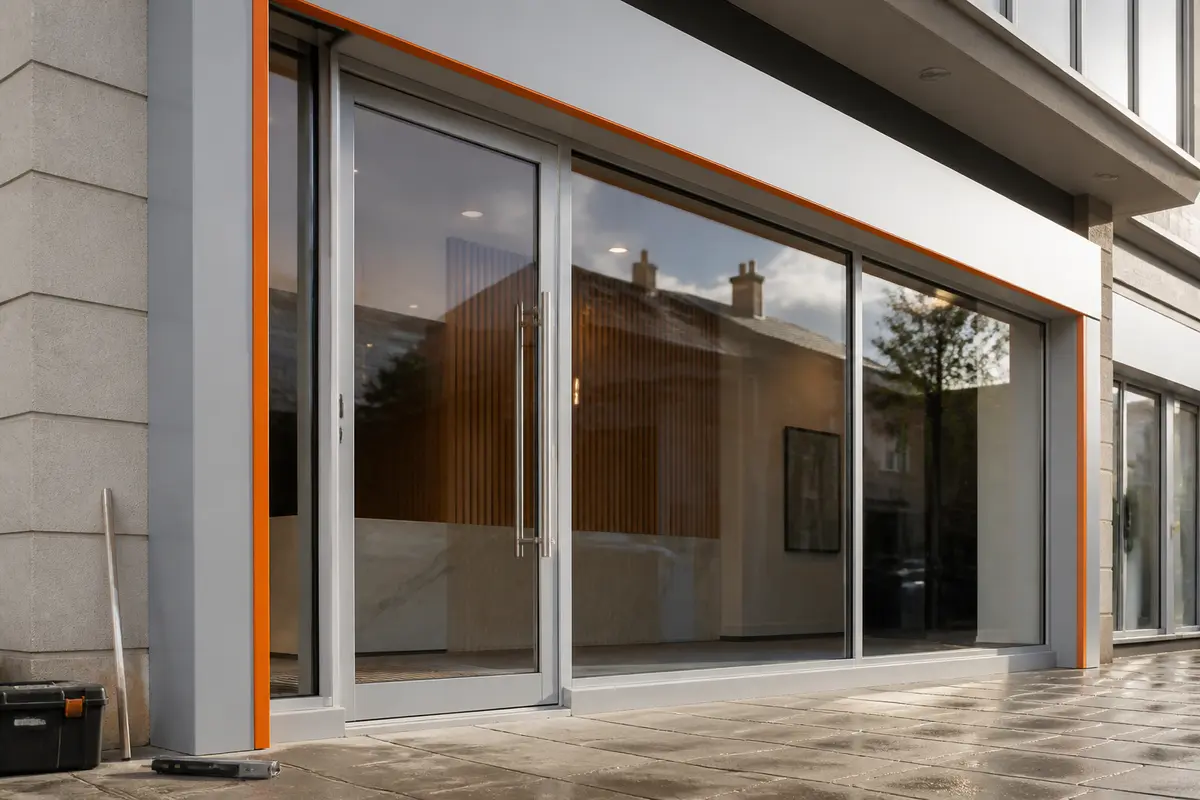
Planning, measuring and installing a replacement shopfront
A replacement shopfront should begin with an accurate professional survey. Existing openings are not always square, surrounding masonry may need assessment and the relationship between the shopfront, threshold, signage, shutters and interior floor level can affect the specification. Measuring before deciding on final frame sizes or glazing proportions reduces the risk of a design that looks right on paper but is impractical to install.
Check permissions and technical requirements early
Planning considerations can depend on the building, area, proposed appearance and whether the site has particular controls. Building Regulations and safety requirements can also apply differently according to the design. These matters should be confirmed for the individual project with an appropriately qualified professional, the relevant authority or building control body where appropriate.
Frame material is only part of this process. Glazing in doors, side panels, low-level walls and large display fronts may need consideration for impact safety. The Government’s UK guidance on safety glazing in shopfronts explains the approach to protection against impact with glazing, including critical locations and large glazed shop and showroom fronts. It is a useful starting point, but it should not replace project-specific confirmation of the final glass and frontage design.
Installation details affect the finished result
Bespoke fabrication allows the frame, doors and glazing to be made for the measured opening, but the installation sequence should also account for trading disruption, safe access and protection of the premises. Discuss how the existing shopfront will be removed, how the opening will be secured during work and whether other elements need coordination. These are practical issues that can influence the preferred material system as much as its appearance.
For businesses planning a new frontage or a carefully scoped replacement, shopfront installation across London can be approached as a joined-up process: survey the opening, agree the design, select compatible frame and glazing materials, then install them with the surrounding details in mind.
How to choose the best shopfront material for your London high street
There is no single winner among shopfront materials. Aluminium is often a versatile choice for modern, glazing-led retail frontages and offers a broad finish range. Steel can suit designs needing a particular architectural expression or robust frame presence. Timber can complement characterful buildings where ongoing care is realistic, while uPVC and composite materials may be relevant in more specific commercial circumstances. Glass should be specified as an essential part of the frontage system, not treated as an afterthought.
To choose well, focus on the conditions your premises actually faces: pedestrian traffic, exposure to weather, entrance use, display requirements, cleaning capacity, security arrangements and the visual relationship with the building. Then assess the frame, glazing, door hardware and any shutters as a coordinated specification. This gives a more dependable basis for comparing durable shopfront materials than selecting from a single sample or material label.
An accurate survey is the point at which these choices become practical. It can identify opening constraints, establish appropriate proportions and reveal where safety, drainage, access or existing fabric need attention. Direct Shopfront can help businesses assess suitable options through its London shopfront services, with the final specification shaped around the individual retail premises rather than a one-size-fits-all solution.
If you are considering shopfront replacement or a new retail frontage, contact Direct Shopfront to discuss the building, the material options and the survey process. A clear brief at the outset can help ensure the chosen shopfront is visually appropriate, workable to maintain and properly considered for a demanding London high-street setting.
READY TO TRANSFORM YOUR SHOPFRONT?
Design - Installation - Materials
Tell us about your project and our team will help you plan the right design, materials and installation.
Request Quote
Free Estimates