
How to Maintain a Commercial Shopfront Throughout the Year
A commercial shopfront has to do more than look presentable. It needs to give customers clear, safe access, help protect the premises from weather and support the day-to-day operation of the business. Small faults such as a dragging door, damaged seal or loose sign can become more disruptive when they are ignored. Effective commercial shopfront maintenance is therefore a year-round routine rather than a task reserved for visible damage.
For business owners, landlords and facilities managers, the aim is to spot change early, keep cleaning and minor care proportionate, and arrange competent support before a defect affects security, safety or trading. Direct Shopfront works in the shopfront installation context, so we understand that the materials, hardware and detailing of a frontage all need practical consideration after installation as well as at the outset.
Why year-round commercial shopfront maintenance matters
Your frontage is exposed to foot traffic, opening and closing cycles, rainwater, wind, sunlight and airborne dirt. It is also one of the first parts of a premises that customers see. Stained glazing, chipped paint, corroding metalwork or poorly operating doors can undermine the impression of a well-run business, while more serious deterioration may affect how securely or reliably the entrance functions.
Regular attention helps separate simple cleaning and adjustment needs from defects that need a professional assessment. It can also make repair planning less reactive: a small area of failed sealant, for example, is easier to investigate than persistent damp staining around a frame.
- Appearance: clean glass, frames and signage keep the frontage legible and welcoming.
- Access: doors, handles, hinges and closers should operate predictably for staff and visitors.
- Weather resistance: intact seals, drainage routes and thresholds help limit avoidable water ingress.
- Security and safety: cracks, loose fittings and faults in locking or closing should not be left to worsen.
- Budget control: a record of developing issues supports sensible prioritisation instead of last-minute decisions.
Maintenance is not a substitute for appropriate repair or replacement where components are damaged. It is a practical way to preserve what is sound and identify when the condition of the shopfront has changed.
Create a practical routine for commercial shopfront maintenance
A useful routine combines brief observations made during normal trading with more deliberate periodic checks. Assign responsibility to a named person where possible, but make sure they know the limits of what should be handled in-house. Cleaning accessible surfaces is very different from working on high-level signage, glazing, locks, door closers or loose structural components.
Checks to carry out regularly
During opening or closing, look at the frontage as a customer would and note anything that has changed. Check that the entrance opens, closes and locks as expected; that glass is free from new obvious damage; and that the threshold is not obstructed by litter, grit or standing water. Wipe marks from customer-facing glazing with products appropriate for the surface, avoiding abrasive tools that may scratch glass or finishes.
Pay attention to the edges of frames and door leaves, where dirt and moisture can collect. If rainwater regularly pools near an entrance, record when it happens rather than assuming the issue is cosmetic. A blocked channel, poor drainage route or failing seal can become more consequential over time.
Planned monthly or periodic checks
A monthly or quarterly inspection provides time to look more closely at seals, visible fixings, frames, glazing and signage. The exact frequency should reflect the shopfront design, location, usage and exposure. Busy entrances may need closer observation because frequent use places more demand on hardware and thresholds.
| Check type | Typical focus | Appropriate response |
|---|---|---|
| Routine visual check | Cleanliness, door movement, obvious glass damage, water around the threshold | Clean accessible areas, log changes and escalate concerns promptly |
| Periodic inspection | Seals, frames, drainage, fittings, signage and hardware condition | Plan minor maintenance or seek advice on defects |
| Post-weather check | Water staining, movement, loose items, debris and new cracks | Make safe where possible and arrange competent assessment for damage |
The practical points in Westminster’s shopfront maintenance checklist reinforce the value of checking glazing, frames, metalwork, signage and fittings for early signs of deterioration. Regular cleaning also reduces the build-up of grime and organic matter that can hold moisture against vulnerable surfaces.
Keep a simple maintenance record
A maintenance record does not need to be complicated. Record the date, the area checked, what was observed, photographs where useful, any action taken and whether further work is required. This is particularly helpful when several people manage a property or when a recurring problem, such as a stiff door or water staining, needs to be explained clearly.
Keep invoices, manufacturer care guidance and details of any previous alterations alongside the log. If you need advice on the wider condition of a frontage, London shopfront installation and support can provide a relevant starting point for discussing the type of shopfront and the issues observed.

WHY DIRECT SHOPFRONT
BUILT WITH PURPOSE.
FINISHED WITH
PRECISION.
Bespoke solutions. Durable materials. Professional installation. One team to manage your project from the first survey through to the final finish — with repairs and aftercare when you need them.
What to check on glass, frames and shopfront doors
A thorough visual inspection should follow the parts of the frontage that customers use and see every day. Focus on changes in condition rather than trying to carry out complex repairs yourself. If there is a safety concern, restrict access where appropriate and seek competent help.
Glass and glazing
Look for cracks, chips, scratches, clouding, loose panes, failed edge seals and water staining around glazing. A small scratch may be mainly visual, but a crack, impact damage or any indication that a pane is loose needs prompt professional attention. Avoid trying to remove deep marks with abrasive pads or attempting to secure glazing yourself.
Shopfront glass maintenance also means keeping glass clean enough to reveal new damage. Check internally and externally where it is safe to do so, as condensation or staining on one side can help indicate where moisture is collecting. Do not use ladders or attempt work at height without suitable competence and equipment.
Frames, seals and thresholds
Inspect frame joints, weather seals and the junctions between frames and surrounding surfaces. Watch for gaps, hardened or split seals, peeling finishes, corrosion, rot, warping, loose fixings and water marks. At the threshold, remove debris that may obstruct drainage, but do not force blocked channels with unsuitable tools or seal over routes intended to shed water.
These details are central to shopfront weather protection. A seal that is no longer performing, or repeated water ingress near a frame, is a reason to investigate rather than simply repaint or clean over the symptom. The effects of rain, wind, frost and exposure vary by site; our guide to how weather conditions affect shopfront materials provides useful context for planning checks around local conditions.
Doors, hinges, locks and closers
Operate the door slowly and observe whether it catches, drags, slams, fails to latch or requires unusual force. Check handles and visible hinges for looseness, and make sure locks engage as intended. A door that is difficult to close can affect accessibility, security and customer flow; forcing it can make a hardware or alignment problem worse.
Cleaning around hinges and thresholds may be appropriate where accessible, but adjustment, replacement or repair of closers, locks and door systems should be handled by a competent professional. This is especially important where a fault affects escape routes, security or the safe closing of a heavy glazed door.
Signage and visible fittings
Check fascia panels, signs, lighting, awnings and visible fixings for dirt, fading, movement, corrosion or damage. A sign that looks secure from ground level may still require specialist inspection if fixings are high or exposed. Do not carry out unsafe work to reach high-level elements. Record the concern, isolate an immediate risk where feasible and arrange suitable support.
Adapt maintenance to the seasons and local weather
Seasonal shopfront maintenance throughout the year is less about following a rigid calendar and more about responding to exposure. A sheltered frontage and a wind-driven, heavily used corner unit will not face the same demands. Schedule a short review before conditions change, then inspect again after periods that have put the frontage under unusual stress.
Preparing for wetter and colder conditions
Before prolonged rain and colder weather, clear accessible debris from threshold areas, clean glazing so cracks and stains are visible, and check the visible condition of seals and frame edges. Look for places where water has previously collected, including beneath door leaves and around drainage paths. Frost can make doors and surfaces harder to use, so avoid forceful operation if a door is sticking.
Pay particular attention to timber coatings, exposed metalwork and joints where moisture can sit. Early action on peeling paint, rust spots or failed seals may help limit further deterioration. If water is entering internally, a professional should identify the cause rather than relying on surface sealant as a universal fix.
Managing sunlight, heat and dry periods
Sunlight can make dirt, scratches and fading more apparent, while heat and dry conditions can reveal movement in some materials or finishes. Check for cracking paint, opened joints, discoloration and signs that seals no longer sit neatly. Use cleaning methods suited to the material and avoid harsh products that could dull coated aluminium, damage timber finishes or mark glass.
Original material and design choices influence the care a frontage needs. For background on traditional and modern shopfront considerations, consider how detailing, finishes and exposure may affect your maintenance plan rather than treating one approach as maintenance-free.
Inspecting after severe weather
After high winds, heavy rain or a busy trading period, inspect from a safe position for displaced signage, new glazing damage, loose fittings, blocked thresholds, fresh water staining and changes in door operation. Photograph any concern before cleaning it away if that will help show its extent. Do not touch loose glass, unstable signs or exposed components; keep people clear and seek appropriate assistance.
Material-specific care for commercial shopfronts
Care should match the material, finish and construction of the existing shopfront. Manufacturer guidance, the age of the frontage and previous alterations can all affect what is appropriate. If you are unsure about a coating, sealant or repair method, ask before applying it.
Glass and aluminium considerations
Glass and aluminium shopfronts benefit from regular non-abrasive cleaning and close attention to edges, seals, drainage areas and hardware. Inspect aluminium for scratches, coating damage, corrosion or staining, especially at joints and near other materials. Clean surfaces can make defects easier to identify, but cleaning alone will not resolve movement, failed glazing seals or a door alignment fault.
For a replacement, alteration or detailed condition discussion, shopfront services across London may be relevant where maintenance findings suggest the existing arrangement needs more than routine care.
Timber shopfront care
Timber shopfront maintenance depends heavily on keeping protective finishes in sound condition. Look for peeling paint, exposed bare areas, cracking, softness, rot, warped sections and open joints. Clean gently and avoid trapping moisture against the timber. Recoating may be needed when the protective finish is breaking down, but decayed, loose or distorted components should be assessed before cosmetic work is planned.
Where the condition or future care of a timber frontage needs specialist consideration, Direct Shopfront’s timber shopfront services in London offer relevant context. The key point is to address moisture pathways and material condition, not simply cover visible defects.
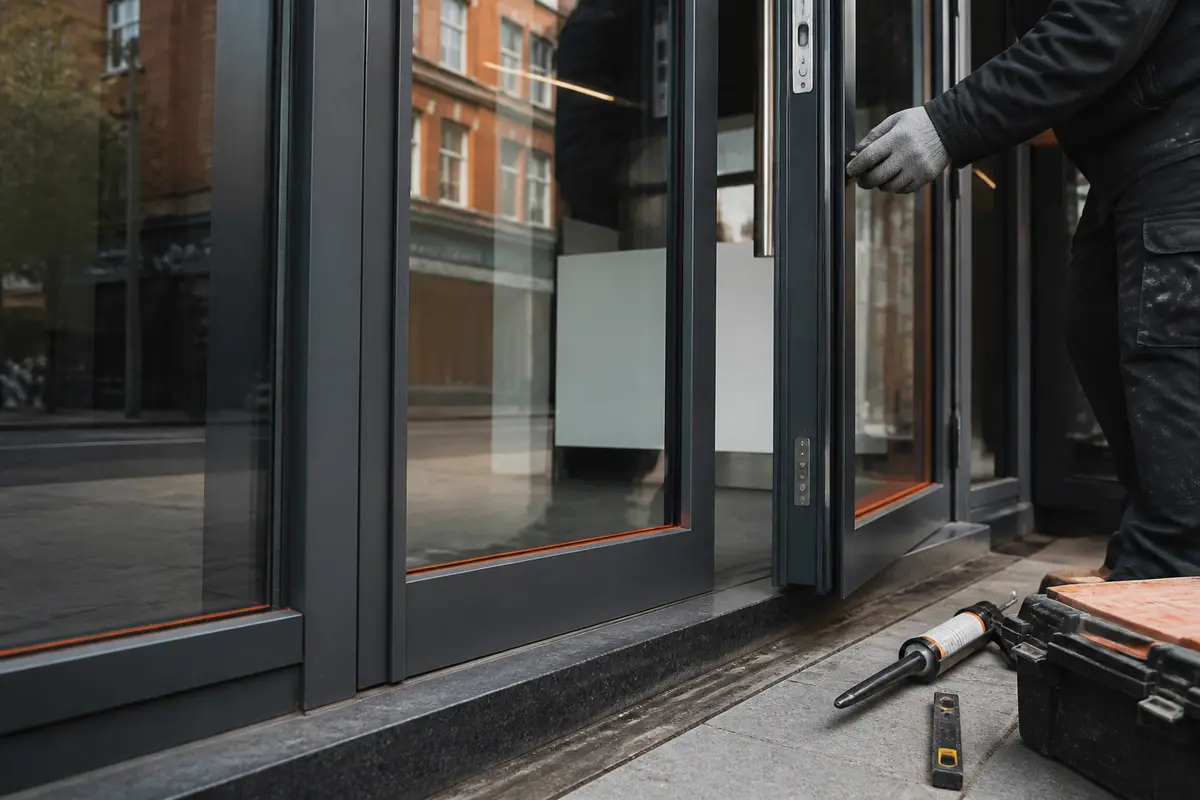
Warning signs that need professional attention
Preventative shopfront maintenance includes recognising when routine checks should stop and professional input should begin. A delay may affect safety, security, weather resistance or the cost and scope of later work. If a defect presents an immediate risk, keep customers and staff away from the affected area where possible.
Damage that may affect safety or security
Seek prompt professional attention for cracked, shattered or loose glazing; doors that will not close, latch or lock properly; unstable handles or hinges; loose signs or awnings; exposed sharp edges; and fittings that appear to be moving. These are not suitable DIY fixes. Do not attempt to reposition heavy glazed doors, remove damaged panes or adjust unfamiliar locking and closing mechanisms.
Signs of water ingress, corrosion or movement
Repeated internal staining, dampness around frame edges, bubbling finishes, persistent condensation in unexpected areas, rust, rot, warped timber, widening gaps or cracks around joints all justify a closer assessment. The visible symptom may not show the full source of the problem. Recording when it occurs, particularly after rain or wind, will help explain the issue.
When cleaning is no longer enough
Cleaning is useful when dirt obscures a sound surface; it is not a remedy for loose panes, failing finishes, damaged seals or corroded fittings. If the same mark returns after cleaning, a door keeps catching, or moisture repeatedly appears around an opening, plan an enquiry rather than adding another temporary measure. The original configuration can influence the right approach, which is why understanding choosing the right shopfront for a London retail business can also be useful when considering substantial future changes.
Plan a maintenance record and know when to seek support
A simple plan turns observations into sensible decisions. It helps prevent urgent faults being mixed with minor presentation work and gives whoever supports the premises a clearer picture of what has happened over time.
Prioritise urgent, routine and planned work
- Urgent: unsafe glazing, a compromised entrance, insecure locking, loose high-level items or active water ingress that could create a hazard.
- Routine: cleaning, accessible debris removal, checking door operation and logging minor surface changes.
- Planned: renewing finishes, addressing early corrosion, reviewing worn seals, or scheduling work around trading needs.
Build inspections into quieter trading periods where possible, but do not postpone urgent safety or security concerns. A realistic plan should also account for access, the age and material of the frontage, and whether other building work could affect frames, glazing or signage.
Prepare useful information before making an enquiry
Clear information makes an initial discussion more productive. Note the address, the affected element, when the issue started, whether it changes after weather events, any effect on access or security, and whether there is visible damage. Photographs taken safely from ground level can be useful. Include any previous maintenance or installation details if available.
If you need to discuss a concerning defect, an alteration or the next practical step for your premises, you can contact Direct Shopfront. Businesses outside central London may also need local context; Direct Shopfront provides shopfront information for Brentwood and Bexley.
Frequently asked questions about commercial shopfront maintenance
How often should a commercial shopfront be checked?
Carry out brief visual checks as part of normal opening and closing, with more deliberate periodic inspections based on the frontage’s material, use and weather exposure. Inspect again after severe weather or an incident likely to have affected the shopfront.
Can staff clean and maintain a shopfront themselves?
Staff can usually clean accessible surfaces and report visible changes. They should not undertake work at height or attempt repairs to glazing, locks, closers, heavy doors, frames, electrical items or loose fittings unless they are appropriately competent and equipped.
What is the first sign of a weather-related shopfront problem?
Common early signs include water staining, dampness around frame edges, debris collecting at thresholds, split seals, peeling coatings, corrosion and a change in door operation after rain or cold weather. Log the pattern and arrange assessment if it persists.
Does a timber shopfront need different maintenance from an aluminium one?
Yes. Timber needs particular attention to paint or other protective finishes, joints and moisture-related deterioration. Aluminium requires suitable cleaning and checks for coating damage, corrosion, seals and joints. Both need sound glazing, functioning doors and clear drainage areas.
Year-round commercial shopfront maintenance is most effective when it is consistent: keep accessible areas clean, check doors and glazing regularly, monitor seals and drainage, and record changes before they become disruptive. When a concern involves safety, security, persistent water ingress or visible deterioration, professional advice is the sensible next step. Direct Shopfront can provide relevant support as you review the condition and longer-term needs of your commercial frontage.
READY TO TRANSFORM YOUR SHOPFRONT?
Design - Installation - Materials
Tell us about your project and our team will help you plan the right design, materials and installation.
Request Quote
Free Estimates