
Mistakes to Avoid When Hiring a Shopfront Installer
Planning a new shopfront? Read Mistakes to Avoid When Hiring a Shopfront Installer and make a more informed choice with guidance from Direct Shopfront.
Appointing the wrong installer can leave a business facing uncertainty over cost, scope, timing and the effect work will have on daily trading. A shopfront is a visible part of the premises, but the appointment decision should be based on more than an initial design or a headline figure. Direct Shopfront publishes guidance for owners, operators and property decision-makers who need the important details clarified before work is agreed, including those considering shopfront solutions for London businesses.
The most reliable way to reduce risk is to test the assumptions behind each proposal. A clear brief, relevant experience and a practical installation plan make it easier to compare installers fairly and identify issues while they are still manageable.
What a suitable shopfront installer should establish before quoting
A meaningful quotation starts with an understanding of the premises and the commercial purpose of the frontage. An installer should have enough information to assess the existing opening, likely measurements, the intended appearance and function, and constraints that could affect the work. This may include the condition of the current frontage, required removal work, access for people and materials, neighbouring occupiers, trading hours and any known restrictions imposed by a landlord or managing agent.
You do not need to arrive with technical drawings or every answer prepared. The point of a site survey and early discussion is to replace assumptions with information. If a proposal is based only on a broad description and a photograph, ask what will be checked before the price and installation schedule are confirmed. Premises measurements, glazing needs, signage requirements and the interface with surrounding finishes can all alter the real scope of works.
For commercial clients commissioning construction-related work, responsibilities and arrangements can vary with the project. The HSE guidance for commercial construction clients highlights the value of appointing capable contractors, supplying relevant pre-construction information and allowing adequate time and resources. In practical terms, share known access constraints, building information and operational risks consistently with every installer you invite to quote.
Questions that reveal whether the scope and quotation are clear
A capable installer should be able to explain what is known, what remains to be confirmed and how each point affects the proposal. Before appointing anyone, ask:
- What is included in the scope of works, and what is expressly excluded?
- Does the price include removal and disposal of the existing frontage where required?
- Which materials, glazing specification, finishes and fittings are assumed?
- Has access been allowed for, including deliveries, loading restrictions and work-area protection?
- What premises information or approvals are still needed before work can be finalised?
- What installation timescale is anticipated, and which assumptions could change it?
- Who is responsible for related items such as signage, making good, electrical work or landlord liaison?
Written answers matter because they create a reference point if the scope changes later. Direct Shopfront encourages customers to use the same core questions with each prospective installer; it is the clearest route to a like-for-like decision rather than a comparison of different assumptions.
Why the cheapest shopfront installation quote can create problems
The lowest figure is not automatically a poor choice. It may reflect a straightforward site, a simpler specification or an installer whose scope genuinely meets your needs. The problem arises when the quotations are not comparable. A lower price may omit removal, access arrangements, finishing work, particular materials or responsibilities that another proposal has already accounted for.
Choosing on price alone can therefore transfer uncertainty into the project. Questions may emerge after appointment about what is included, whether an assumption holds at site, or who pays for an item outside the written scope. That can mean revised costs, delayed decisions or avoidable trading disruption. A higher total is not automatically better either; what matters is whether the written quotation transparently explains what you are buying.
Comparing quotations on more than the total price
| Check | What to compare |
|---|---|
| Scope of works | Removal, supply, installation, making good and exclusions. |
| Materials and finishes | Frame type, glazing, colour or finish, hardware and stated assumptions. |
| Programme | Survey, lead-in, installation duration and factors that could affect timing. |
| Site access | Deliveries, working hours, protection, permits and operational restrictions. |
| Responsibilities | Approvals, coordination with other trades, signage and any client-provided items. |
| Written terms | Payment stages, change process, aftercare and warranty terms where offered. |
Set the quotations beside your original brief and note any missing information before making a decision. Where one quote includes an item and another does not, ask for clarification rather than assuming the cheaper figure covers it. This is a better basis for budget approval and reduces the likelihood of an appointment being made on an incomplete scope.

WHY DIRECT SHOPFRONT
BUILT WITH PURPOSE.
FINISHED WITH
PRECISION.
Bespoke solutions. Durable materials. Professional installation. One team to manage your project from the first survey through to the final finish — with repairs and aftercare when you need them.
How to check relevant shopfront installation experience
Claims of experience are most useful when they are specific to the job in front of you. Rather than asking only how long an installer has been trading, discuss the type of commercial premises, existing frontage and installation conditions they will need to handle. A busy retail unit with restricted delivery access presents different coordination needs from an empty unit undergoing a wider refurbishment.
Ask how the installer will approach surveys, site communication and the handover of the completed frontage. Their responses should show that they have considered the practical sequence of work, not merely the visual result. For a closer look at the questions behind this assessment, see why relevant installer experience matters.
Credentials and trade information can form part of your checks, but they should not replace discussion of the actual proposal. It is reasonable to ask what competencies, insurance arrangements or project responsibilities are relevant to the work, while recognising that requirements depend on the project and circumstances. If your premises are outside London, the same site-specific approach applies: an installer considering work in Chelmsford should still understand the particular access and operational conditions of that location. Likewise, a proposal for Battlesbridge should be assessed against the premises rather than a generic template.
Experience should match the premises and proposed frontage
Relevant experience means being able to discuss comparable challenges, such as working around an occupied entrance, replacing an existing frame, coordinating glazing or accommodating restricted access. It also means understanding how the chosen materials and design may affect installation, maintenance and the business’s ability to keep operating.
Give prospective installers a clear outline of your premises and proposed frontage, then listen for useful follow-up questions. An aluminium shopfront, a timber frontage and a glazed entrance are not interchangeable specifications; each can involve different details, finishes and interfaces with the building. The goal is not to demand a past project identical to yours, but to establish whether the installer’s planning is grounded in conditions similar enough to be relevant.
Choosing a shopfront design or material before checking suitability
It is easy to begin with a preferred appearance, particularly when a frontage is intended to refresh a brand or improve kerb appeal. However, selecting a material or design before discussing practical suitability can create rework. The frontage needs to work with the existing opening, the building’s character, expected use, security considerations and the commercial objective of the premises.
Aluminium may suit one brief, while timber or a different glazing arrangement may better support another. These are illustrative choices rather than default answers. The right discussion considers the proposed finish, maintenance expectations, visibility, doors and any connection to signage or surrounding fabric. Current visual ideas can be helpful, but use shopfront design trends London businesses should consider as a starting point for questions, not as a reason to choose a style before the site has been assessed.
Discuss materials, finishes and approvals early
Ask an installer to explain how the suggested materials and finishes relate to your opening and operating needs. If a traditional look is central to the brief, reviewing timber shopfront options in London can help frame that conversation. Equally, a modern aluminium or glazed frontage should be discussed in terms of its proposed specification and how it will be installed, not just its appearance in a visual.
Planning requirements, building regulations and landlord conditions may be relevant depending on the premises and proposed works. Do not assume permission is either required or unnecessary based on material alone. Clarify applicable approvals early with the local planning authority, landlord, managing agent or appropriate professional advice where needed. This gives the installer a more reliable basis for the scope and helps avoid ordering or scheduling work around an unresolved requirement.
For broader context while keeping the decision tied to your premises, you can explore the shopfront options available in London. The practical next step is to narrow a design brief only after the survey, material discussion and any relevant approval checks have identified what is suitable.
Overlooking access, communication and trading disruption
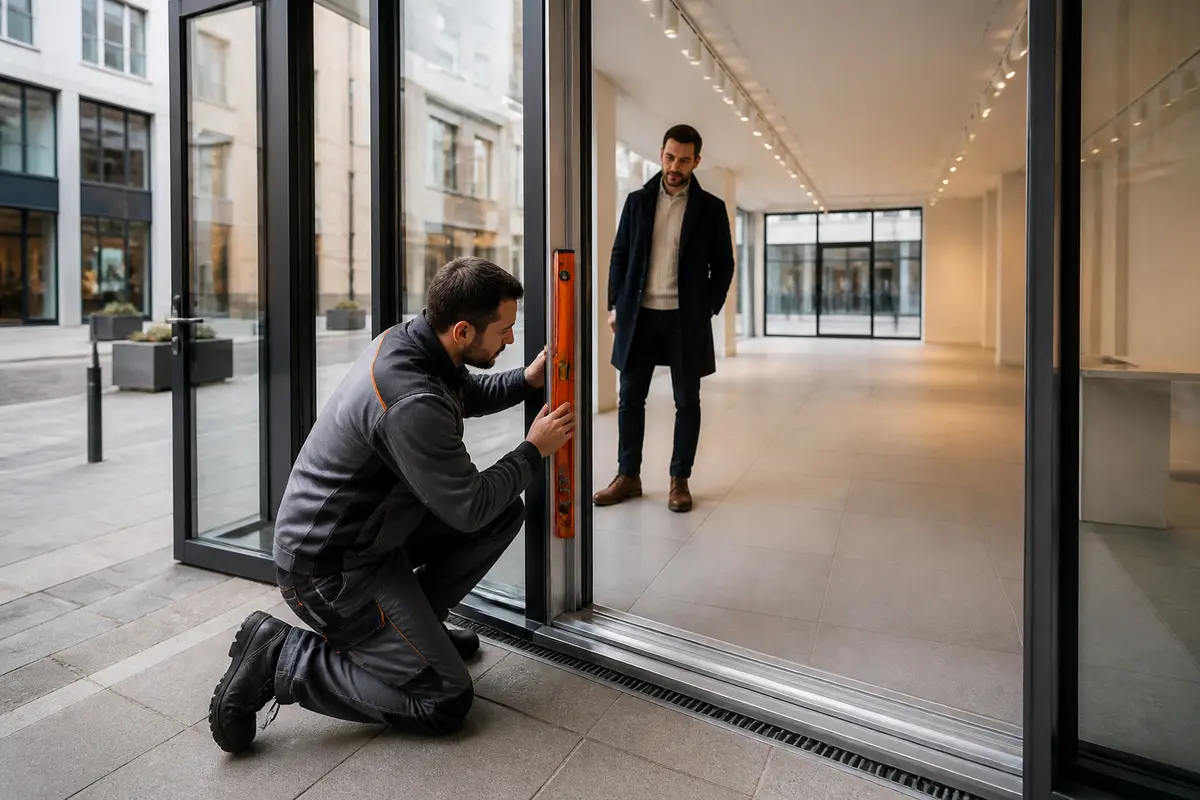
A well-specified frontage can still cause difficulty if the installation is planned without regard to how the business operates. Deliveries, customer access, stock movement, security, neighbours and opening hours all affect what can happen on site. The earlier these realities are shared, the more likely the installation schedule is to reflect the premises rather than an idealised programme.
Identify one decision-maker or site contact who can answer questions promptly, and make sure the installer knows who else needs to be involved. This may include a landlord, building manager, centre management, security provider or another contractor. Direct Shopfront’s guidance on how commercial shopfront projects are planned explains why this coordination should be addressed before work is due to begin rather than resolved during installation.
Communication should also cover what will happen if an existing condition differs from the survey assumptions. Agreeing who can authorise a change, how it will be recorded and how it could affect the programme gives the business more control over a situation that might otherwise interrupt trading.
Agree the project plan before work begins
A short, practical readiness check can prevent many avoidable delays. Before the installation date, confirm:
- the final scope, materials, finishes and any agreed changes in writing;
- site access arrangements, delivery routes, parking or loading restrictions and working hours;
- the expected installation schedule and whether any closure, partial access or customer diversion is needed;
- the named site contact and the route for approvals or urgent decisions;
- what areas need to be cleared, protected or kept accessible;
- known building information, hazards and restrictions that the installer needs before arrival; and
- the status of any landlord, managing-agent or relevant authority requirements.
Providing complete information is not administrative fussiness; it gives every party a better chance to plan safely and realistically. Use this guide to information to share before work starts to organise the details before confirming a date. It is also worth reviewing practical steps for preparing premises for shopfront installation, especially where the entrance must remain controlled or the business will trade around the works.
The strongest appointment decision is not necessarily the fastest or the lowest-priced one. It is the one supported by a clear written scope, a proposal suited to the premises, relevant planning and communication, and a realistic approach to access and disruption. When you are ready to discuss a proposed shopfront project or clarify the information needed for a quotation, contact Direct Shopfront for a measured next conversation.
Contact Us
READY TO TRANSFORM YOUR SHOPFRONT?
Design - Installation - Materials
Tell us about your project and our team will help you plan the right design, materials and installation.
Request Quote
Free Estimates