
Shopfront Trends London Businesses Should Know
A shopfront is often the first physical point of contact between a London business and a potential customer. It signals what happens inside, how approachable the premises feels and whether the business appears established, relevant and easy to use. The shopfront trends London businesses should know are therefore not simply matters of fashion. They are practical choices about visibility, brand fit, access, security, durability and the character of the street.
As a shopfront installation business, Direct Shopfront helps businesses assess these decisions in the context of their actual premises rather than following a style blindly. A successful update should support the customer experience while respecting the building, managing maintenance demands and leaving room for future changes to branding or use.
Why shopfront trends matter to London businesses
London streets contain everything from historic parades and conservation-sensitive frontages to newer mixed-use developments. In each setting, a commercial frontage contributes to the public realm as well as the business behind it. A cluttered, poorly lit or tired entrance can make a premises harder to notice or less inviting; an overly generic replacement can also look out of place against its neighbours.
Current design thinking favours active, legible and welcoming frontages. This does not mean every business needs extensive glass or a minimalist façade. It means the entrance, fascia signage and display area should make sense for the people using the premises. A café may need visibility into a lively interior, while a professional service may prefer controlled glazing and restrained branding.
The Mayor of London’s London Plan design principles emphasise high-quality, inclusive, safe and locally responsive public-facing design. These principles are useful when evaluating trends, but they are not a substitute for checking the current requirements that apply to a particular borough, building or lease. Planning consent and other approvals may be relevant in some circumstances, especially where a building has heritage considerations or changes affect the exterior.
For an owner or property manager, the commercial question is straightforward: will the proposed frontage make the premises easier to find, enter, understand and maintain? Good shopfront solutions across London bring those questions together rather than treating appearance as a separate afterthought.
The leading shopfront design trends London businesses should know
Cleaner, more considered frontages
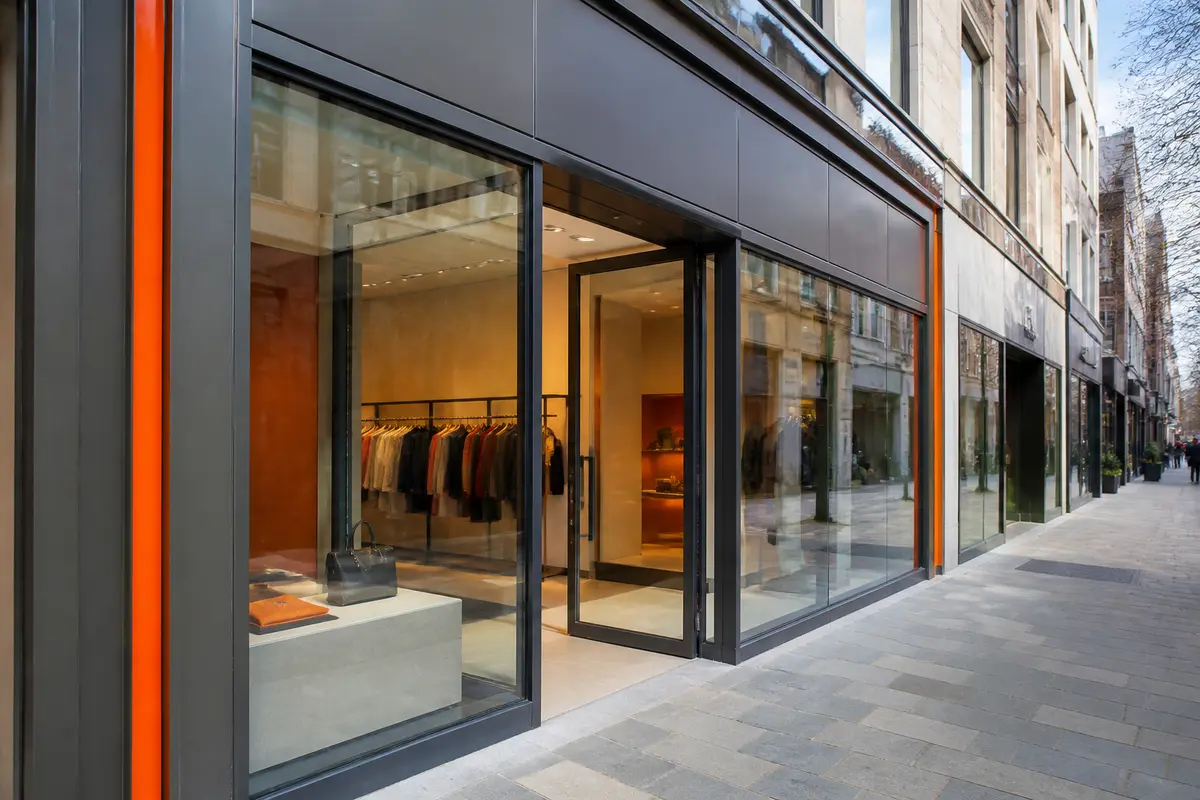
One of the clearest London shopfront design trends is a move towards visual clarity. This usually involves fewer competing messages, a more proportionate fascia, cleaner sightlines around the entrance and a display window with a clear purpose. The aim is not emptiness; it is to make the business recognisable quickly from the pavement.
For retailers, this can mean displaying a smaller number of products with better lighting and more breathing space. For salons, clinics and offices, it may mean simplifying window graphics so visitors can identify the business and locate the entrance without hesitation. A restrained palette and consistent materials can make even a compact frontage feel more intentional.
This approach is especially valuable where customers are passing at speed, where neighbouring signs compete for attention or where the frontage is narrow. Before choosing a design, consider viewing it from across the road, from either direction along the pavement and at dusk. The most effective shopfront branding ideas work at those everyday viewing distances rather than only in a close-up visualisation.
Stronger brand visibility through glazing, lighting and signage
Brand visibility increasingly comes from how several elements work together: glazing that reveals the right amount of the interior, fascia signage that is readable without overpowering the elevation, and lighting that supports safe, comfortable evening use. These components should reinforce one another rather than compete.
Glazing can make a retail frontage feel open and can give window displays greater impact. It also calls for careful decisions about privacy, glare, cleaning and security. Frosted sections, manifestation, internal screens or selective graphics may help where full transparency is not appropriate. Lighting should illuminate signage and the threshold without causing unnecessary glare for pedestrians or neighbours.
A frontage also has a powerful role in shaping expectations before someone enters. Our guide to how a shopfront shapes first impressions explores why details such as condition, legibility and entrance design matter. The trend worth following is not brighter signage at any cost; it is a coherent presentation that helps the right customer feel confident about stepping inside.
Balancing traditional character with modern performance
Traditional versus modern shopfronts London businesses consider should not be treated as a simple either-or choice. Many premises benefit from retaining the proportions, depth or detailing that gives the building its identity while introducing contemporary glazing, improved hardware, robust finishes or more efficient lighting.
A period façade may suit painted timber details and signage designed around existing architectural lines. A newer unit may suit slim aluminium framing or a frameless glass treatment. In both cases, the best outcome is one that looks appropriate to the building and supports modern day-to-day operation. For a fuller comparison of the choices, see these traditional and modern shopfront approaches.
Where local character or conservation considerations are present, avoid assuming that a popular retail shopfront trend is automatically suitable. Discuss the design early with relevant specialists and check borough guidance before committing to fabrication or installation.

WHY DIRECT SHOPFRONT
BUILT WITH PURPOSE.
FINISHED WITH
PRECISION.
Bespoke solutions. Durable materials. Professional installation. One team to manage your project from the first survey through to the final finish — with repairs and aftercare when you need them.
Materials and performance trends for London shopfronts
Aluminium, glass and other contemporary options
Material choice is central to commercial shopfront trends because it affects appearance, lifespan, security integration, thermal performance and the amount of routine care a frontage needs. Aluminium remains a common option for modern shopfront ideas for businesses because it can create crisp profiles, accepts a range of finishes and works well with glazed systems. Glass can improve visibility and daylight, while solid panels, timber elements or carefully selected cladding may be useful where privacy, texture or local character is more important.
No material is universally right. A highly glazed frontage may suit a showroom but be impractical for a business with confidential activity near the entrance. Timber can provide warmth and character but needs a realistic maintenance plan. The decision should account for how the business operates, who opens and closes the premises, exposure to the street and whether future alterations are likely.
It is also helpful to separate surface appearance from system performance. Frames, glazing specification, seals, hinges, doors and thresholds all affect how a shopfront works over time. When reviewing shopfront project examples, look beyond the headline style and ask how the entrance, signage, display area and materials support the use of that particular unit.
Durable and weather-conscious design
London weather brings rain, wind, changing temperatures and airborne dirt, while busy streets can add accidental knocks and frequent door use. Durable shopfront materials for London businesses should be selected with these ordinary pressures in mind. A finish that looks excellent at handover but is difficult to clean, prone to marking or poorly suited to the exposure of the site can create avoidable disruption later.
Weather-conscious design includes practical details: suitable drainage, protected joints, well-fitted seals, hardware designed for frequent use and materials that can be maintained without specialised or excessive intervention. It also includes placing signs, lighting and display features so they remain secure and serviceable. Our overview of how weather affects shopfront materials can help frame the questions to raise before choosing a finish or glazing arrangement.
Thermal performance can be relevant too, particularly for premises with extensive glazing. It should be considered alongside daylight, solar gain, condensation risk and the existing building fabric rather than assumed from the material name alone. A considered specification can help make the entrance more comfortable for staff and visitors while avoiding design choices that are difficult to live with.
When repair or refurbishment may be more suitable than replacement
Not every trend-led update requires a completely new frontage. If the structural framework is sound, refurbishment may refresh the customer-facing appearance through new signage, glazing adjustments, door hardware, repainting, lighting or repairs to localised damage. This can be particularly sensible where the existing frontage has character worth retaining or where a phased update better suits the business.
Replacement may be the stronger option when the layout no longer supports access, the system has persistent performance problems, materials are beyond economical repair or the business is making a substantial change to its use and brand. The key is to assess condition and function before choosing a visual direction. Direct Shopfront can discuss whether an upgrade should focus on targeted work or broader London shopfront repair services.
Maintenance should be part of this decision from the beginning. A new finish or sign is not necessarily low-maintenance simply because it is new. Planning cleaning, inspections and prompt attention to worn seals, doors or finishes protects the investment. For practical seasonal considerations, see our advice on maintaining a commercial shopfront throughout the year.
Accessibility, security and sustainability are becoming core requirements
Designing a more accessible entrance
Accessible shopfront design is increasingly recognised as fundamental to a welcoming commercial frontage. Customers, staff, delivery personnel and visitors should be able to identify the entrance and use it as comfortably as the premises allows. Clear routes, suitable threshold treatment, door operation, adequate opening space, legible signage and well-managed lighting are all worth considering.
There is no one-size-fits-all solution, especially in older buildings with restricted levels or constrained pavements. However, accessibility should be considered before a design is fixed, not added as a last-minute compromise. Requirements can vary by project, so obtain appropriate professional advice and check current building, leaseholder and local authority expectations for the premises.
Integrating security without making the frontage unwelcoming
Security remains a practical concern, but retail shopfront trends increasingly favour solutions that do not leave the business looking closed or hostile during trading hours. Well-designed glazing, robust doors, appropriate locking, discreet security shutters and considered lighting can work together without dominating the façade.
The right balance depends on the location, stock, operating hours and existing risk measures. A visible shutter may be necessary in some contexts, while an internal or perforated solution may preserve more of the frontage elsewhere. Security should be discussed as part of the full design, including sightlines, access and maintenance, rather than attached after the visual scheme has been approved.
Making sustainability a practical design consideration
Sustainable shopfront design is most useful when it reduces avoidable waste and supports a frontage that can remain serviceable. Retaining viable components, choosing durable materials, specifying repairable elements, using efficient lighting and avoiding short-lived decorative treatments can all be practical steps. Adaptability matters as well: a design that can accept a future sign change or internal layout alteration may prevent unnecessary replacement.
Sustainability does not require a single material or aesthetic. It requires asking how long the components should last, how they can be maintained and whether the scheme responds sensibly to the building. These same questions often support better value and a more resilient customer-facing frontage.
How to choose trends that fit your London business and premises
Match the frontage to the customer experience
Start with the journey a customer makes from pavement to counter, reception or display. What should they notice first? Do they need to see products, prices, activity inside or a calm professional environment? Is the doorway obvious to someone unfamiliar with the business? These answers should shape the design before a colour, material or sign style is selected.
A food business may prioritise an open, easy-to-read frontage and resilient entrance surfaces. A boutique may use glazing and visual merchandising to create interest while retaining a controlled brand feel. A landlord preparing a unit for new occupancy may favour a flexible, neutral commercial frontage that can be adapted later. The most useful London shopfront design trends are those that improve the real experience of arriving and entering.
Consider the building, street and surrounding businesses
Your shopfront sits within a wider elevation and street scene. Look at the building’s proportions, the width of the unit, architectural details, pavement activity, neighbouring uses and how the frontage appears in daytime and after dark. A dramatic design that works in a large retail park may not translate to a narrow historic parade, and a subtle frontage may need extra attention to sign legibility on a busy route.
Street context does not mean copying neighbouring businesses. It means creating a distinct presence that still feels credible in its setting. This is where a site-specific conversation about materials, signage scale, glazing and entrance design is more valuable than selecting a trend from a catalogue. Businesses reviewing wider London shopfront installation options should also establish early whether landlord permissions, estate rules or borough considerations influence the scope.
Direct Shopfront also serves customers beyond central London contexts, with location-specific information for Chelmsford and Havering. Wherever a premises is located, the same principle applies: a frontage should respond to its immediate setting rather than rely on a generic formula.
Assess installation, maintenance and future changes
A practical proposal should explain how the work affects trading, access, existing services, signage, security measures and the condition of the opening behind the old frontage. Ask what needs to be measured, what preparatory repairs may be necessary and whether installation can be phased. If the business must remain open, plan customer routes and communications around the work rather than treating disruption as an afterthought.
Also consider the next three to five years. Could the fascia accommodate a rebrand? Can lighting be serviced? Will the display layout still work if product lines change? Are replacement parts and finishes likely to be manageable? These questions help distinguish a genuinely useful trend from an expensive short-term look.
Common mistakes when following shopfront trends
- Prioritising a fashionable finish over the building: a frontage should work with the unit’s scale, character and constraints.
- Trying to communicate everything at once: excessive window graphics, competing signs and too many colours reduce clarity.
- Ignoring the threshold: an attractive fascia cannot compensate for a confusing, awkward or poorly lit entrance.
- Leaving security until the end: retrofitted measures can undermine an otherwise coherent design.
- Assuming replacement is always necessary: repair or refurbishment may provide the needed improvement where the underlying system is sound.
- Overlooking approvals and permissions: check current project-specific requirements before ordering materials or committing to a scheme.
- Choosing without a maintenance plan: cleaning access, wear points and servicing should influence the specification.
These mistakes are avoidable when the business objectives, premises condition and street context are assessed together. The trend itself should be the final layer of the decision, not the starting point.
A practical checklist before planning a shopfront update
- Define what the frontage needs to improve: visibility, access, display, security, condition, brand alignment or a combination.
- Review the building, lease and street context, including any likely consent or landlord requirements.
- Photograph the frontage at different times of day and assess it from normal customer approaches.
- Identify what can be retained, repaired or adapted before assuming full replacement is required.
- Choose materials and glazing with exposure, cleaning, weather resistance and expected use in mind.
- Plan signage, lighting, displays and security as one coordinated scheme.
- Consider accessibility from the first layout discussion, including the route and entrance operation.
- Ask how installation will affect trading, customers, deliveries and adjacent occupiers.
- Build in a realistic plan for maintenance, future branding changes and replacement components.
- Check current borough and professional guidance relevant to the individual premises before work begins.
Choosing the right next step for your shopfront
The shopfront trends London businesses should know point towards a simple conclusion: the strongest frontage is not necessarily the most elaborate or the most overtly modern. It is the one that gives customers a clear, welcoming and appropriate first impression while meeting practical needs for access, security, resilience and maintenance.
Whether you are considering a modest refurbishment, repairs to an existing frontage or a full new installation, begin with the building and customer journey. Then use design trends to refine the solution, not dictate it. Direct Shopfront can help businesses consider a suitable direction for their premises, balancing retail presence and brand visibility with the practical realities of a London commercial property.
READY TO TRANSFORM YOUR SHOPFRONT?
Design - Installation - Materials
Tell us about your project and our team will help you plan the right design, materials and installation.
Request Quote
Free Estimates