Latest Designs for Shopfronts London Commercial Properties
Explore the latest designs for Shopfronts London commercial properties, featuring modern styles, energy-efficient materials, and bespoke solutions.
– Contact Us Today –
The appearance of a commercial property has become one of the most influential factors in attracting customers before they even step inside. Across London’s diverse retail districts, businesses are investing in modern exteriors that reflect their brand identity while meeting practical requirements for durability, security, and sustainability. From luxury boutiques in premium shopping destinations to independent cafés and high-street retailers, property owners are embracing innovative architectural concepts that combine aesthetics with functionality. Choosing professionally designed Shopfronts London solutions has become a strategic investment for businesses aiming to improve visibility, customer engagement, and long-term value.
Why Modern Shopfronts London Designs Are Transforming Commercial Properties
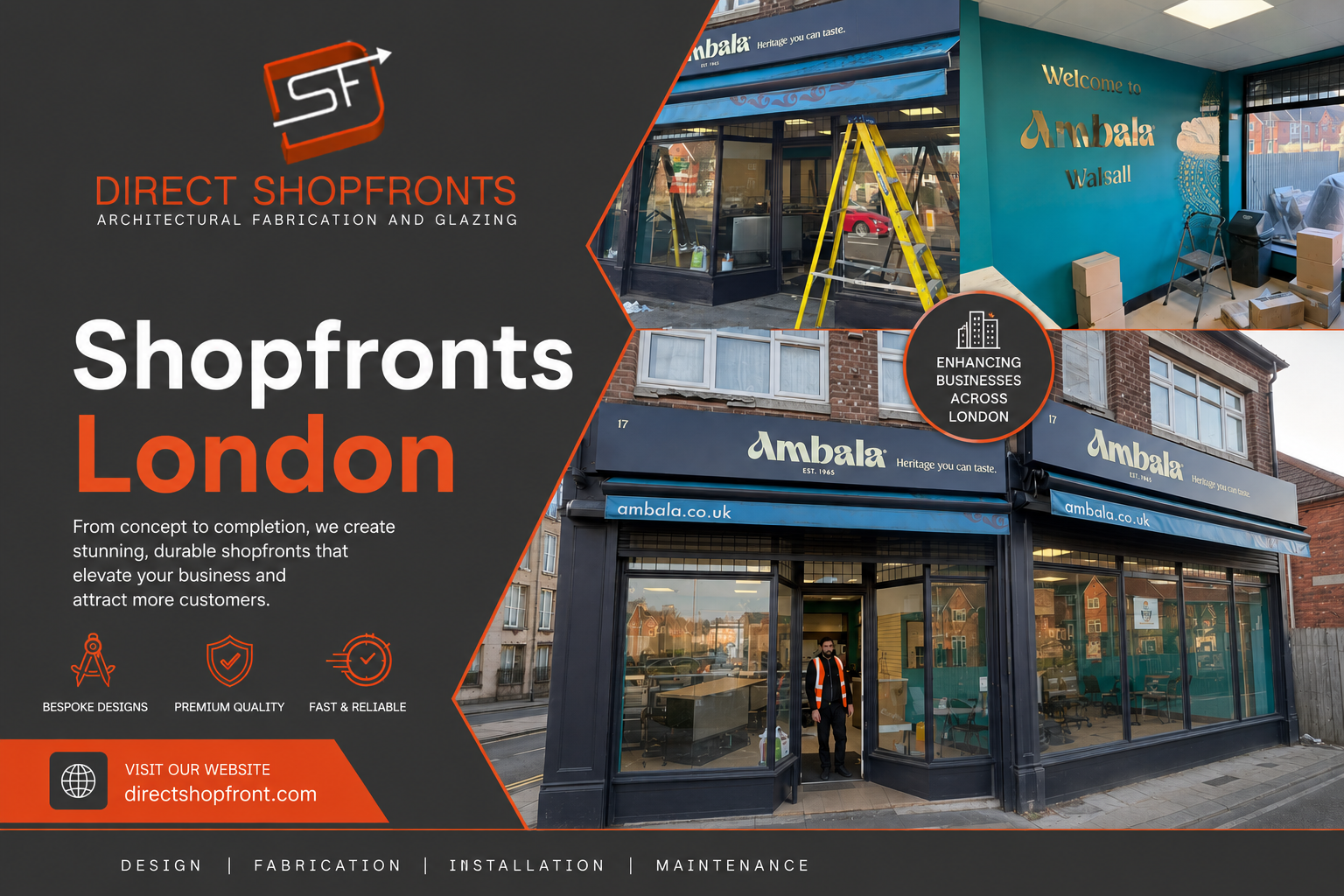
Commercial property owners across the capital are increasingly recognising that well-designed Shopfronts London solutions are no longer just an attractive exterior feature but a strategic business investment. Today’s retail frontages combine architectural innovation, energy-efficient materials, intelligent lighting, enhanced security, and customer-focused accessibility to create spaces that perform as effectively as they look. Whether located on a busy high street, within a shopping centre, or in a mixed-use commercial development, modern façades are designed to maximise visibility, strengthen brand identity, and improve the overall customer experience.
The latest design trends also place greater emphasis on sustainability, long-term durability, and future adaptability, allowing businesses to remain competitive in an evolving retail landscape. The following sections explore the key innovations shaping contemporary commercial frontages and explain why these developments are becoming essential for businesses seeking lasting success.
Latest commercial properties designs include:
Minimalist Glass Frontages
Modern commercial architecture continues to favour clean, uncluttered designs that maximise visibility and natural light. Large glazed elevations have become increasingly popular because they create an inviting atmosphere while showcasing products without visual barriers.
Key features include:
- Frameless or slim aluminium glazing systems
- Floor-to-ceiling display windows
- Hidden structural supports for seamless finishes
- Neutral colour palettes that complement modern branding
- Larger viewing areas for enhanced product displays
Minimalist façades also provide greater flexibility when businesses refresh interior layouts, allowing displays to remain visible from multiple viewing angles throughout the day.
Slim Aluminium Framing Systems
Heavy framing is gradually being replaced by ultra-slim aluminium profiles that provide structural strength while maintaining an elegant appearance.
Advantages include:
- Greater glass coverage
- Improved corrosion resistance
- Long service life
- Reduced maintenance requirements
- Modern architectural appeal
Powder-coated finishes are available in numerous colours, enabling businesses to align external appearances with established branding without compromising durability.
Smart Integrated Lighting
Exterior lighting has evolved far beyond traditional illuminated signs. Today’s commercial properties use layered lighting strategies that improve visibility throughout the evening while highlighting architectural details.
Popular lighting installations include:
- LED perimeter lighting
- Concealed frame illumination
- Motion-sensitive entrance lighting
- Window display spotlights
- Colour-adjustable feature lighting
Smart lighting systems can also be programmed to adjust brightness depending on daylight conditions, improving energy efficiency while maintaining consistent visual appeal.
Sustainable Building Materials
Environmental responsibility has become a major consideration during exterior renovations. Businesses increasingly select materials that reduce environmental impact without sacrificing quality.
Frequently specified materials include:
- Recycled aluminium
- Sustainably sourced timber
- Low-emission glass
- Energy-efficient glazing
- Recyclable composite panels
These materials help reduce operational costs while supporting broader sustainability objectives that appeal to environmentally conscious customers.
High-Performance Energy Efficient Glass
Modern glazing technology significantly improves insulation while maintaining excellent transparency.
Current innovations include:
- Double and triple glazing
- Solar control coatings
- Low-emissivity glass
- Acoustic insulation
- UV protection
Energy-efficient glazing reduces heating and cooling expenses throughout the year while creating a more comfortable environment for customers and employees.
Contemporary Entrance Systems
Entrance design has become an integral part of customer experience rather than simply providing access.
Popular entrance options include:
- Automatic sliding doors
- Frameless pivot doors
- Wide accessibility entrances
- Soft-close mechanisms
- Touch-free opening systems
Improved accessibility supports customer convenience while complying with modern building standards.
Bespoke Architectural Metalwork
Generic exterior finishes are giving way to customised architectural detailing that creates memorable first impressions.
Bespoke features often include:
- Decorative aluminium panels
- Laser-cut branding elements
- Integrated planter systems
- Feature columns
- Architectural screening
These additions allow businesses to establish unique visual identities while maintaining consistency with surrounding architecture.
Mixed Material Designs
Rather than relying on a single finish, many commercial properties now combine multiple premium materials.
Popular combinations include:
- Glass and timber
- Aluminium and stone
- Steel with composite panels
- Brick alongside glazing
- Concrete accents with metal detailing
Mixed materials create depth and visual interest while helping businesses stand out in competitive retail environments.
Digital Display Integration
Static advertising is increasingly being replaced by dynamic digital displays that engage passing customers.
Modern display technologies include:
- High-brightness LED screens
- Interactive touch displays
- Digital menu boards
- Promotional video walls
- Window projection systems
These technologies allow businesses to update promotions instantly without replacing printed materials.
Hidden Security Features
Security remains essential, but today’s solutions are designed to remain discreet without compromising appearance.
Integrated security options include:
- Internal roller shutters
- Laminated security glazing
- Concealed CCTV systems
- Smart access control
- Reinforced aluminium framing
Businesses no longer need to sacrifice aesthetics to achieve high levels of protection.
Natural Material Finishes
Biophilic design principles are influencing commercial exteriors as businesses seek warmer, more welcoming appearances.
Common natural finishes include:
- Timber-effect aluminium
- Stone cladding
- Living green walls
- Natural textured panels
- Decorative planting zones
These elements soften contemporary architecture while creating memorable customer experiences.
Bold Colour Accents
Although minimalist architecture dominates, carefully selected colour accents help reinforce brand recognition.
Frequently used applications include:
- Entrance frames
- Architectural fins
- Feature panels
- Illuminated signage backgrounds
- Decorative trims
Contrasting colours draw attention without overwhelming the overall design.
Large Format Display Windows
Retailers increasingly prioritise expansive display areas that function as continuous marketing spaces.
Benefits include:
- Better product visibility
- Increased footfall
- Enhanced natural lighting
- Flexible merchandising
- Improved customer engagement
Large display windows encourage spontaneous purchases by allowing customers to experience products before entering.
Weather Resistant Exterior Systems
London’s changing climate demands materials capable of performing throughout the year.
Modern protective features include:
- Marine-grade powder coatings
- Waterproof sealing systems
- UV-resistant finishes
- Corrosion-resistant hardware
- Thermal break technology
These features minimise deterioration while reducing maintenance expenditure.
Branding Through Architectural Design
Rather than relying solely on signs, businesses now incorporate branding directly into the building façade.
Architectural branding methods include:
- Custom colour schemes
- Integrated logos
- Patterned cladding
- Feature lighting
- Signature entrance designs
This creates a stronger and more memorable visual identity that remains effective even outside trading hours.
Accessibility-Focused Design
Inclusive design has become a priority across commercial developments.
Accessibility improvements include:
- Step-free entrances
- Automatic doors
- Wide opening widths
- Clear navigation features
- Enhanced external lighting
These improvements create welcoming environments for customers of all abilities while supporting compliance with accessibility regulations.
Sustainable Timber Alternatives
Many businesses appreciate the appearance of timber but require greater durability.
Modern alternatives offer:
- Timber-look aluminium
- Composite wood finishes
- UV-resistant coatings
- Minimal maintenance
- Longer service life
These materials provide natural aesthetics without ongoing treatment requirements.
Flexible Retail Frontages
Businesses increasingly require adaptable exteriors that can evolve with changing operational needs.
Flexible features include:
- Modular panel systems
- Replaceable display sections
- Expandable entrance configurations
- Interchangeable signage zones
- Easy-access maintenance panels
Future modifications become simpler and more cost-effective when flexibility is incorporated during initial design.
Architectural Lighting as Branding
Lighting has become an extension of brand identity rather than purely functional illumination.
Innovative approaches include:
- Colour-changing LEDs
- Programmable lighting scenes
- Illuminated architectural lines
- Accent lighting for displays
- Evening feature illumination
Businesses can create distinctive nighttime appearances that improve visibility long after daylight hours.
Acoustic Performance
Noise reduction has become increasingly valuable in busy commercial districts.
Improved acoustic systems include:
- Laminated acoustic glazing
- Multi-layer sealing systems
- Insulated entrance doors
- Acoustic framing
- Noise-reducing ventilation solutions
These enhancements create more comfortable interiors for customers and staff while improving overall shopping experiences.
Smart Technology Integration
Digital technology is becoming increasingly integrated into commercial exteriors.
Smart innovations include:
- Occupancy monitoring
- Automated climate management
- Smart lighting controls
- Remote security monitoring
- Digital maintenance alerts
Connected systems improve operational efficiency while reducing long-term maintenance costs.
Premium Powder-Coated Finishes
Surface coatings now offer significantly improved performance and design flexibility.
Modern coating benefits include:
- Scratch resistance
- Fade protection
- Wide colour selection
- Low maintenance
- Extended lifespan
Businesses can maintain attractive façades for many years with minimal upkeep.
Curved Architectural Features
Curved lines are returning to commercial design, creating softer and more distinctive building profiles.
Popular applications include:
- Rounded entrance frames
- Curved glazing
- Circular display windows
- Feature canopies
- Sculptural metalwork
These architectural elements help properties stand apart from neighbouring buildings while creating memorable visual identities.
Enhanced Night-Time Presence
Retail environments increasingly compete beyond traditional trading hours.
Night-focused improvements include:
- Illuminated branding
- Feature lighting
- Transparent glazing
- Window display illumination
- Architectural uplighting
Even when closed, businesses continue promoting their brands through attractive exterior presentation.
Heritage-Inspired Contemporary Design
Many London commercial districts combine historic architecture with modern retail requirements.
Successful heritage integrations include:
- Traditional proportions
- Modern glazing technology
- Decorative mouldings
- Contemporary materials
- Sympathetic colour palettes
Balancing heritage character with current performance standards allows businesses to modernise while respecting surrounding architecture.
Maintenance-Conscious Design
Commercial property owners increasingly prioritise long-term value by selecting finishes requiring minimal maintenance.
Maintenance-friendly solutions include:
- Self-cleaning glass
- Powder-coated aluminium
- Corrosion-resistant fixings
- Durable sealants
- Easily replaceable components
Lower maintenance requirements reduce lifetime ownership costs while preserving professional appearances.
Future Trends Shaping Commercial Exteriors
Commercial property design continues evolving as technology, sustainability, and customer expectations advance.
Emerging developments include:
- AI-controlled lighting systems
- Carbon-neutral construction materials
- Adaptive digital displays
- Smart glazing technology
- Fully integrated building management systems
Businesses investing today increasingly consider future adaptability alongside immediate visual impact, ensuring their properties remain competitive for many years.
Why Professional Installation Matters
Exceptional architectural design depends not only on quality materials but also on precision installation. Every glazing panel, aluminium profile, seal, and structural fixing must be accurately fitted to achieve optimal performance and longevity.
Professional installation delivers:
- Accurate structural alignment
- Improved thermal efficiency
- Enhanced weather resistance
- Longer product lifespan
- Compliance with current building standards
Experienced specialists also ensure projects are completed efficiently while minimising disruption to business operations.
Conclusion
Modern commercial property design is increasingly defined by innovation, sustainability, intelligent technology, and strong architectural identity. Businesses are moving beyond conventional retail exteriors by adopting premium materials, integrated lighting, advanced glazing, bespoke metalwork, and flexible design solutions that improve both appearance and performance. As customer expectations continue evolving, investing in professionally designed Shopfronts London solutions enables businesses to strengthen their brand presence, improve operational efficiency, enhance security, and create lasting first impressions that support long-term commercial success. Direct Shopfront delivers bespoke solutions that combine modern craftsmanship with practical performance, helping commercial properties achieve distinctive and future-ready exteriors.
Frequently Asked Questions
1. What are the latest design trends for commercial shopfronts?
Current trends include minimalist glass façades, slim aluminium frames, integrated LED lighting, sustainable materials, energy-efficient glazing, smart security systems, and bespoke architectural finishes that enhance both appearance and functionality.
2. Why are aluminium shopfronts a popular choice for commercial properties?
Aluminium is lightweight, durable, corrosion-resistant, and requires very little maintenance. It also supports large glass panels, making it ideal for creating modern, visually appealing commercial entrances.
3. How can a modern shopfront improve customer attraction?
A contemporary shopfront creates a strong first impression, increases visibility from the street, showcases products more effectively, and reinforces brand identity, all of which can encourage more customers to enter the premises.
4. Are energy-efficient shopfronts worth the investment?
Yes. Energy-efficient glazing and thermally insulated framing help reduce heat loss, lower energy bills, improve indoor comfort, and contribute to a more sustainable commercial property over the long term.
5. Can a commercial shopfront be customised to match my business branding?
Absolutely. Modern shopfront systems can be tailored with custom colours, finishes, lighting, signage integration, glazing styles, and architectural features to reflect your brand identity while maintaining a professional appearance.